Al-Amal College Organizes a Specialized Scientific Workshop on the Employment of Artificial Intelligence in Education
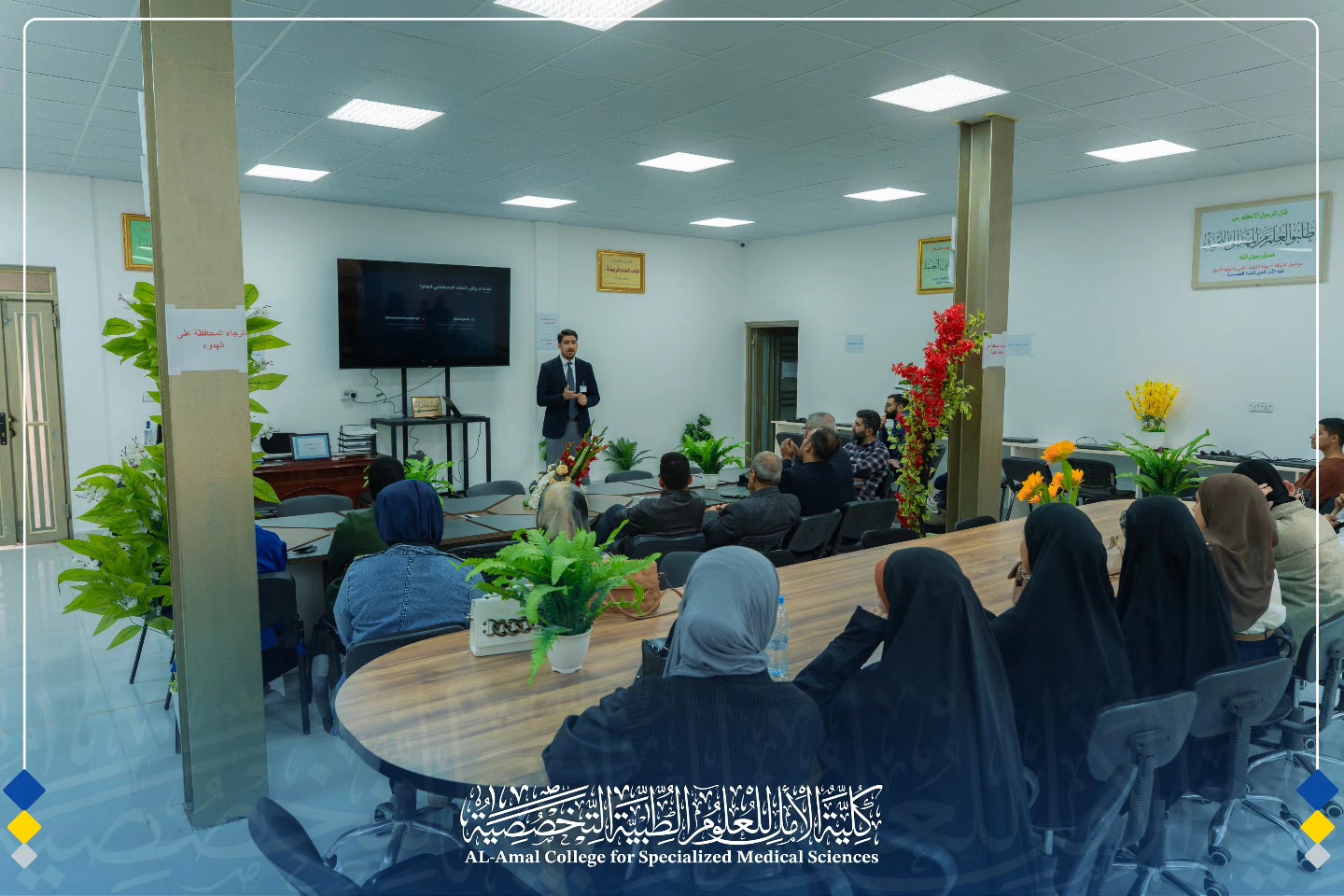
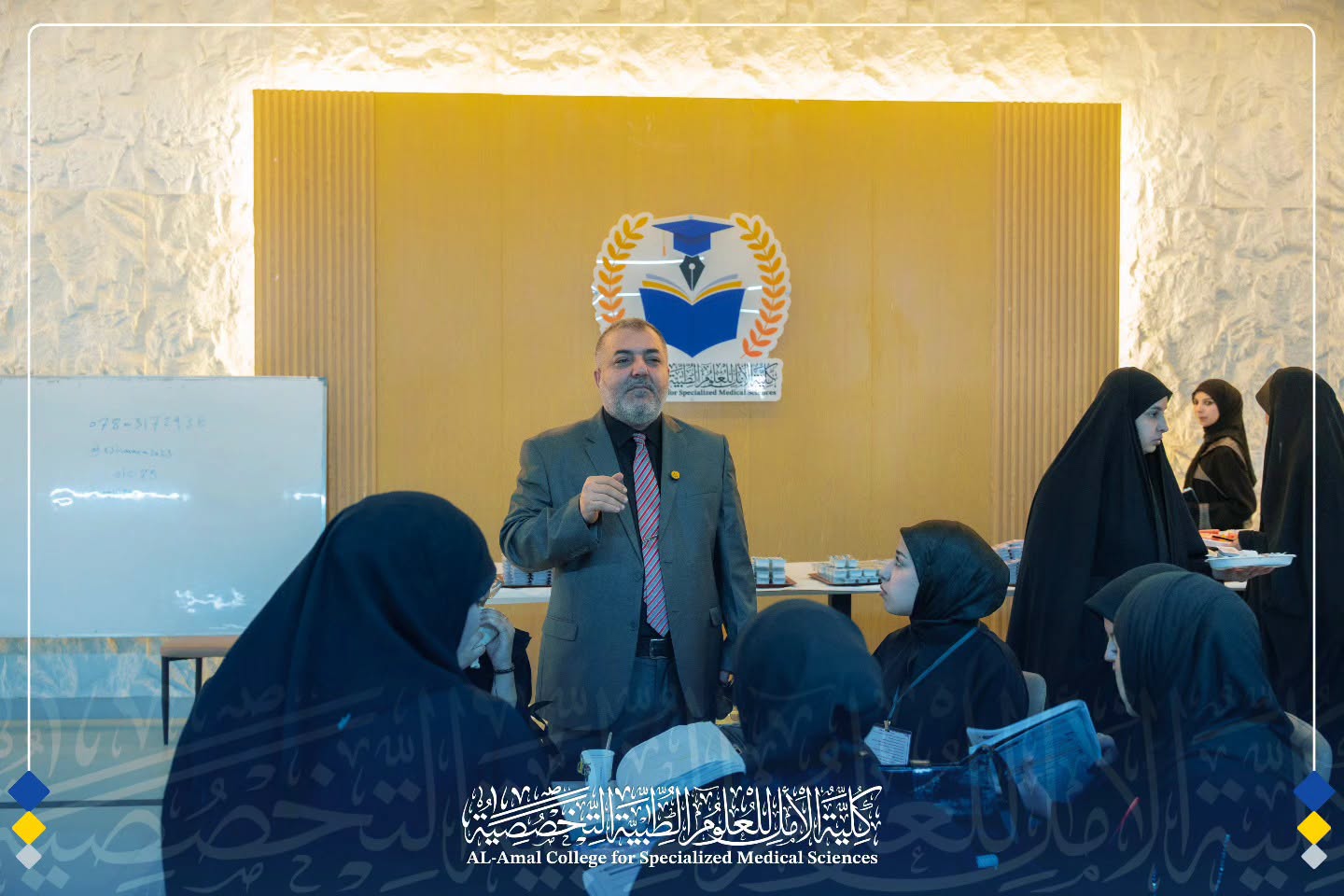
As part of its continuous endeavor to keep pace with technological advancements and enhance modern educational tools, the Continuing Education Division at Al-Amal College for Specialized Medical Sciences, in collaboration with the Information Technology (IT) Division, organized a specialized scientific workshop titled: "Artificial Intelligence and its Applications in Supporting the Educational Process." The event saw the participation of an elite group of professors and a gathering of students from various scientific departments.
The workshop featured a systematic scientific presentation detailing the fundamental differences between general artificial intelligence applications, such as ChatGPT and Gemini, which rely on vast databases and may sometimes generate inaccurate information due to what is known as the "hallucination" phenomenon. In contrast, the presentation highlighted Google's NotebookLM platform, which restricts its answers solely to the sources and files uploaded by the user, thereby ensuring the accuracy of the information and its strict adherence to the specified scientific framework.
Furthermore, the workshop reviewed the mechanisms of employing the platform in summarizing academic lectures and preparing structured review questions that contribute to enhancing academic achievement. It also explained the feature of converting study materials and textbooks into audio and visual formats, allowing students to review content through interactive methods tailored to different learning styles.
The event witnessed a direct practical application in front of the attendees, during which real study materials were used to demonstrate the mechanism of data input, analysis, and the extraction of summaries and questions. This hands-on approach added an applied dimension that significantly enhanced the scientific benefit of the workshop.
The workshop was presented by Engineer Ali Ismail, who concluded by emphasizing the critical importance of the rigorous academic use of artificial intelligence technologies. He stressed the necessity of directing these tools in a manner that serves students and elevates the overall level of educational performance within the academic institution.