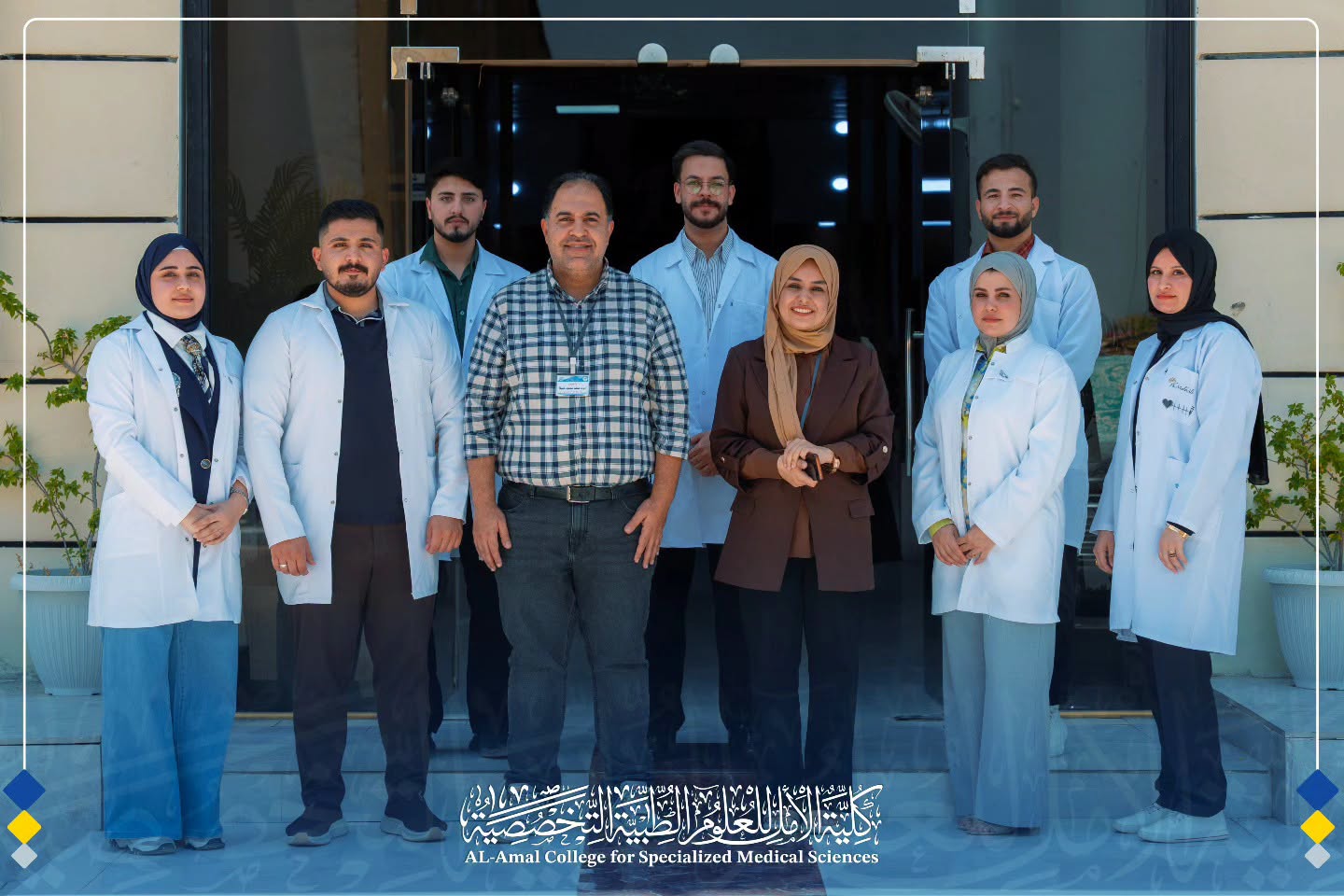
The Academics Syndicate in Karbala Visits Al-Amal College and Commends Academic and Infrastructural Developments
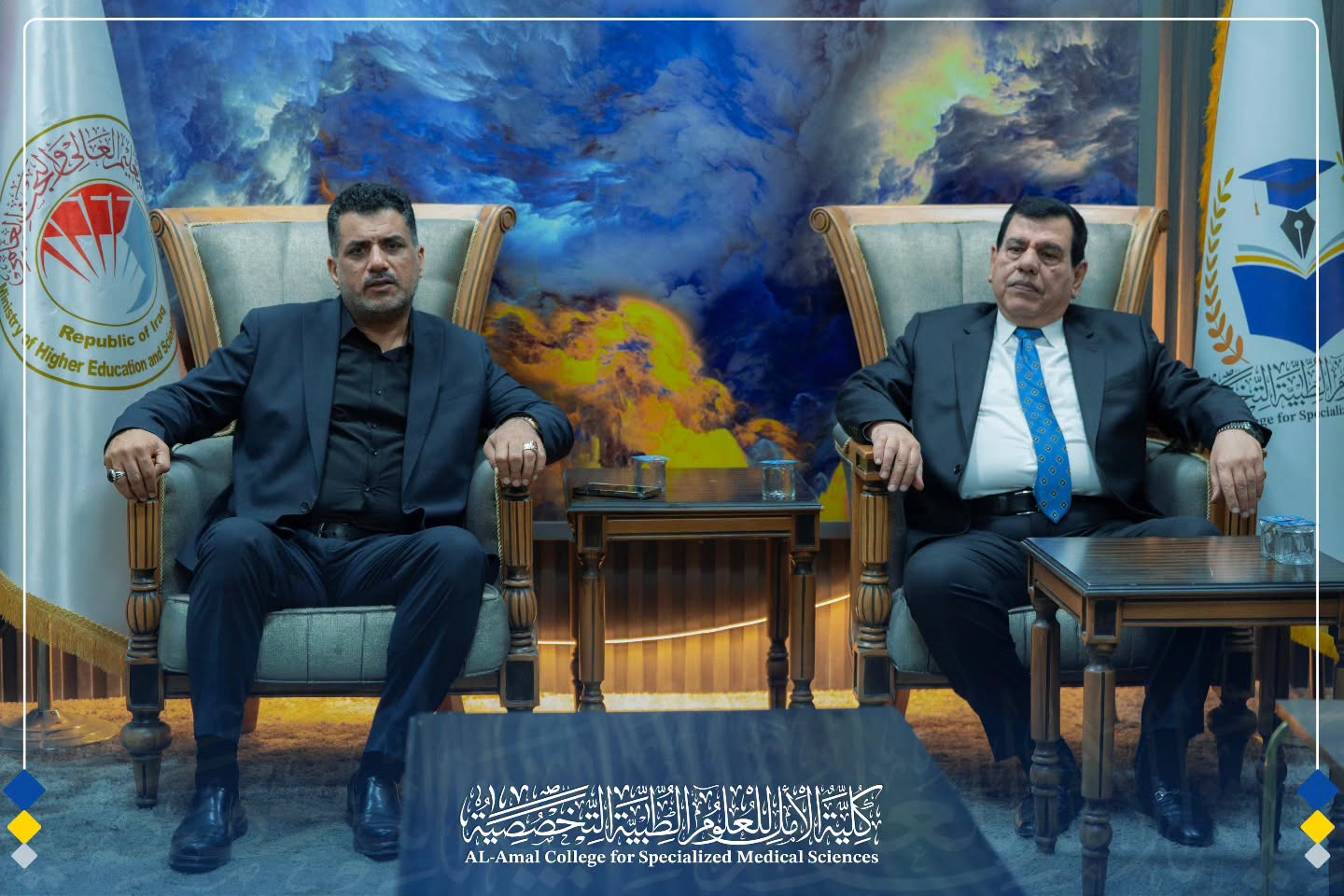
Al-Amal College for Specialized Medical Sciences in Holy Karbala received a delegation from the Iraqi Academics Syndicate – Karbala Branch. The delegation was headed by Prof. Dr. Muneer Abdul-Ali Abbas Al-Daami, Head of the Academics Syndicate in Karbala, accompanied by Asst. Prof. Dr. Khalil Hamid Al-Awadi, a member of the Syndicate's General Assembly. This visit falls within the framework of enhancing mutual cooperation among academic institutions.
The delegation was warmly received by Dr. Abdullah Al-Tamimi, Head of the Investment Board at the College, and Prof. Dr. Abdul Amir Al-Khafaji, Associate Dean for Scientific Affairs, along with several faculty members and administrators.
During the visit, the Head of the Syndicate extended his congratulations and best wishes to the administrative staff, academics, and College affiliates on the occasion of the new academic year, wishing them a year crowned with success. He highly commended the immense efforts exerted by the College and its administrative and teaching staff in achieving distinguished scientific results in the assessment examinations of the past academic year.
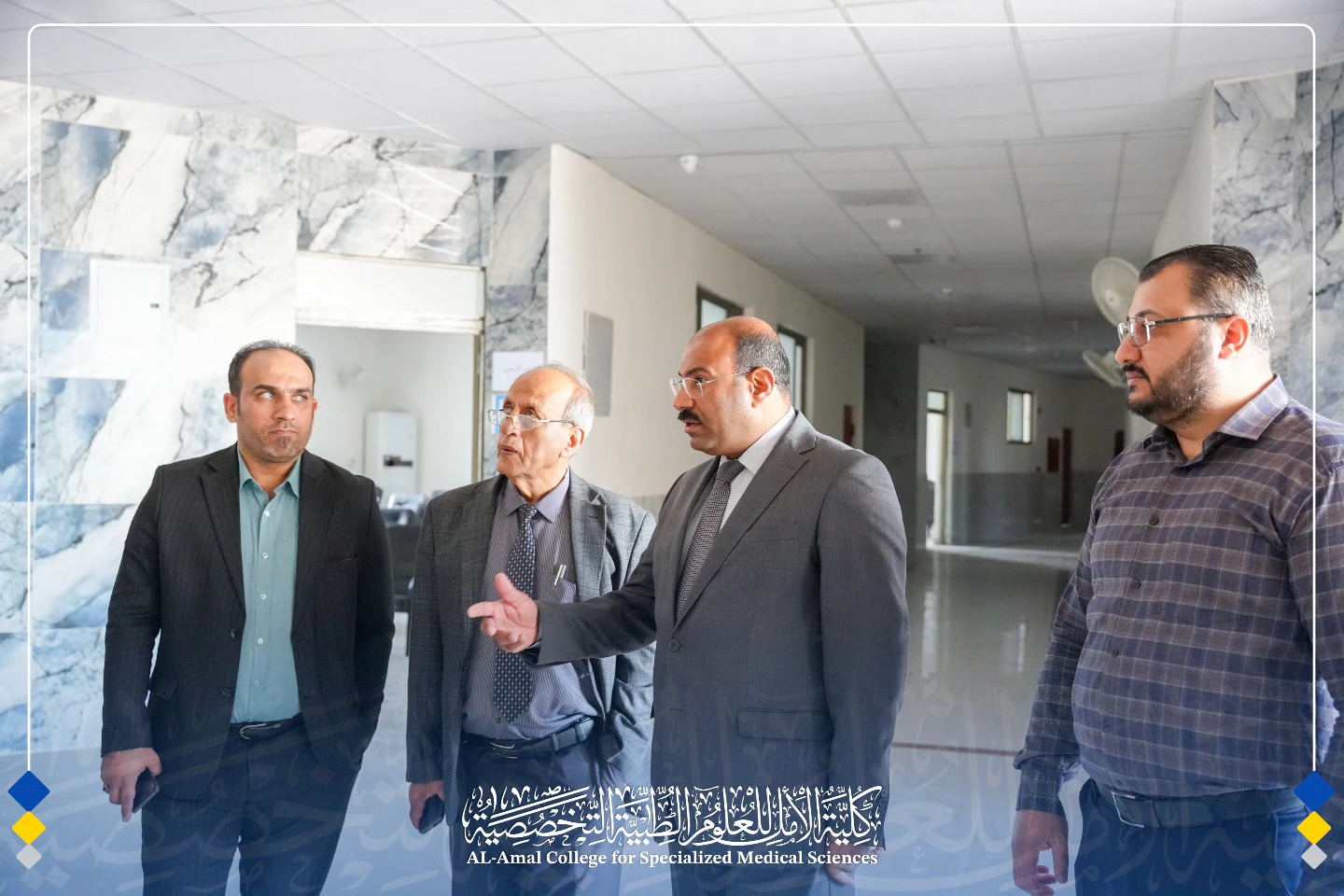
The visit included a field tour through the College's corridors and modern facilities. The delegation reviewed the stages of construction and infrastructural development nearing completion, which aim to provide a modern educational environment that aligns with the requirements of contemporary medical education.
In a press statement, Prof. Dr. Muneer Al-Daami expressed his admiration for the advanced level the College has attained. He emphasized that these achievements reflect the administration's dedication to presenting a pioneering model in private medical education. This, in turn, contributes to preparing competent professionals who meet the needs of the labor market and support the academic journey in Iraq.
This visit aligns with Al-Amal College’s ongoing efforts to strengthen its relationships with syndicates and academic institutions. It seeks to open broader horizons for scientific cooperation and the exchange of expertise, ultimately serving the development of the higher education sector and elevating its quality.